

Fine Hair: Lighter Than You Think, Stronger Than You Know
For the client who's spent years fighting their hair. And for the stylist learning to work with what's actually there.
Wenny Ho
8 min read
There's a particular kind of frustration that follows fine-haired people through their lives.
You wash your hair, style it carefully, and by midday it's fallen. You try a volumising product and end up with crunchy, flat hair that somehow looks worse than before. You watch someone else shake out a full, bouncy blow-dry and feel a quiet resignation. My hair just doesn't do that.
You've probably been told, at some point, that there's not much to be done. That fine hair is fine hair. That you just have to work with what you've got.
That last part is true. But "working with what you've got" doesn't mean settling. It means understanding, really understanding, what your hair actually is, how it behaves, and why. Because once you know that, almost everything changes.
What Fine Hair Actually Is and What It Isn't
Fine Hair and Thin Hair Are Not the Same Thing
This is probably the most important distinction to make, because conflating them leads to a lot of wrong choices, wrong products, wrong cuts, wrong expectations.
Fine hair refers to the diameter of each individual strand. Fine-haired people have strands that are narrower in width than average, closer in size to a thread than a rope, if you want to picture it. It says nothing about how many strands you have. You can have an abundance of fine hair, a genuinely full head of it, and still feel like your hair lacks body, because each strand contributes less visual mass than a coarser one would.
Thin hair, on the other hand, refers to density, the number of follicles and strands on your scalp. Someone with thin hair has fewer strands overall, regardless of whether each strand is fine or coarse.
Many people have both, fine strands and lower density, which compounds the challenge. But many people with fine hair have perfectly healthy density and just need a different strategy, not more hair.
The distinction matters because the solutions are different. Managing fine hair is largely about technique, product weight, and cut. Managing lower density involves different considerations entirely.
Fine Hair Gets Oily Faster and There's a Real Reason for That
If you've always wondered why your hair looks flat and greasy a day after washing when other people seem to go three or four days between shampoos without a problem, you're not doing anything wrong. Your hair is simply built differently.
The sebaceous glands at your scalp produce natural oils at roughly the same rate regardless of your hair type. But with fine hair, those oils travel down the shaft much more quickly there's less surface area, less texture to slow them down, and so they reach the mid-lengths and ends faster, and the scalp area looks weighed down sooner.
This is also why heavy products, rich conditioners, thick serums, oils applied near the roots, tend to accelerate exactly what you're trying to avoid. The hair is already prone to loading up with moisture; adding dense product on top speeds that process significantly.
Fine Hair Is More Fragile Which Means It Deserves More Care, Not Less
Because each strand is narrower, it has a smaller internal structure, fewer protein bonds, less cortex, a thinner cuticle layer. This doesn't mean fine hair is doomed to break, but it does mean it has less tolerance for the things that damage all hair: excessive heat, over-processing, rough handling.
Fine hair that's been bleached without adequate bond support, or straightened daily at high temperatures without protection, or pulled tightly in styles that place tension on the shaft, that hair will tell you about it. The breakage tends to show up as short, wispy pieces around the face and at the ends, the hair that just won't grow past a certain point.
The response to this isn't to do less to your hair out of fear, it's to do things more thoughtfully. With intention. With the right products and temperatures and techniques for what your hair actually needs.
Fine Hair Can Absolutely Hold a Style
Let's put this myth to rest: fine hair cannot hold curls, cannot be styled, cannot do anything interesting without collapsing within the hour.
It simply isn't true. What is true is that fine hair holds styles differently than coarser hair does, and the approach needs to reflect that. Techniques that work beautifully on thick hair, heavy creams, tight curls set without prep, styles that rely on the hair's own weight to fall correctly, often fail on fine hair, not because the hair is incapable, but because the method was wrong for the material.
Fine hair styled with the right prep, the right products in the right amounts, and the right techniques can hold movement, texture, and shape beautifully. The goal just looks a little different, lighter, more fluid, more effortless, and that's not a compromise. That's actually an aesthetic many people spend a lot of effort trying to achieve.
How to Style Fine Hair: A Different Way of Thinking About It
The shift that makes the biggest difference for most fine-haired clients isn't finding the right product. It's changing the underlying approach, from trying to add more to everything, to working more precisely with less.
Start with a lightweight wash routine, and be strategic about where product goes. The goal of your wash routine is to clean the scalp thoroughly without depositing anything heavy that will sit on the hair and pull it down. Use a volumising or lightweight shampoo, and don't feel like you need to skip conditioner entirely, because dry, unconditioned fine hair is fragile fine hair. Just apply conditioner from mid-length to ends only, keeping it off the scalp and roots where it will contribute to flatness.
Blow-dry with intention, not just with heat. One of the simplest and most effective techniques for fine hair is drying with the head flipped forward, using your fingers to lift at the roots. This trains the hair to fall with volume rather than against the scalp. A concentrator nozzle on your dryer directed upward at the roots, a round brush used to roll sections upward as you dry, these create structure from the inside out, without needing product to do the heavy lifting.
Use less product than you think you need, and add from there. The most common fine-hair mistake isn't the wrong product, it's too much of any product. A small amount of a lightweight mousse or texturising spray worked through damp hair before drying gives hold without weight. A rice of dry shampoo at the roots on day two or three absorbs oil and adds texture that actually helps style hold. You can always add a little more. You can't take it back once it's on.
Rethink what "styled" looks like on your hair. Tight, uniform curls tend to fall quickly on fine hair and can look over-worked. Soft bends, loose waves, gentle movement created with a larger barrel iron or even by wrapping sections around your fingers while drying, these work with fine hair's natural tendencies rather than fighting them. The result looks lighter, more natural, and actually lasts longer because it's not trying to be something the hair has to constantly resist.
Refresh rather than rewash. Daily washing strips the natural oils your hair needs to stay in good condition and can actually trigger the scalp to produce more oil to compensate. Dry shampoo used at the roots before bed on day two, not after your hair already looks oily, but proactively, absorbs the overnight oil production and means you wake up with hair that looks and feels like day one. It's a small habit shift that makes an outsized difference.
What Fine Hair Needs From a Cut, and From a Colour
This is where professional expertise really earns its place, because the wrong cut on fine hair doesn't just look unflattering, it can make already-challenging hair significantly harder to manage.
Fine hair generally benefits from a cut that removes weight rather than adding it. Blunt, heavy lines can look flat and droopy; strategic layering, done thoughtfully, not aggressively, creates movement and the illusion of thickness. The right cut for fine hair should make it feel easier to style, not harder. If you leave a haircut and your fine hair is more difficult to work with, something wasn't calibrated correctly.
Colour can be a remarkable tool for fine hair. Dimension, the variation between lighter and darker tones, creates the visual illusion of depth and fullness that a single, flat colour rarely achieves. Highlights, balayage, toning that adds warmth or shadow in the right places, all of these make fine hair look more substantial without a single strand being added.
What fine hair doesn't tolerate well is excessive chemical processing without adequate support. Bleach used too heavily, too quickly, or without bond-building treatments on already-fine hair is a fast path to fragility. If lightening is part of your plan, a gradual approach with proper treatment is not just recommended, it's essential.
Something a Little Softer
We want to say something about the experience of having fine hair in a world that seems to celebrate volume.
There's a particular kind of tired that comes from fighting your hair every day, from spending time and money and energy trying to make it do something it resists, and still walking away feeling like you fell short of something. Like your hair is a problem to be solved rather than something to be understood.
We've watched clients apologise for their fine hair in the consultation chair. Describe it as hopeless. Talk about it the way they might talk about a character flaw.
Fine hair isn't a flaw. It's a type. And like all hair types, it has its own language, its own set of needs and possibilities that are genuinely worth understanding, and genuinely capable of being beautiful.
Sometimes learning to work with your hair rather than against it requires a small act of acceptance: not resignation, not giving up on what you want your hair to look like, but releasing the idea that your hair is failing you. It's not. It's just waiting for someone to understand it.
A Word to the Stylists
Fine-haired clients often arrive carrying a long history of disappointment. They've been over-conditioned, over-layered, given cuts that collapsed, sold products that weighted them down further. They've tried hard and been let down.
That history sits in the consultation. It shapes what they say and what they don't say, how much they trust your suggestions, whether they believe the result will be different this time.
Meeting that history with patience, really listening to what hasn't worked before and why, is some of the most valuable work you can do before you pick up a tool. And being honest when a client's goal isn't quite right for their hair type, while offering something genuinely beautiful in its place, is the skill that builds long-term trust.
Fine-haired clients who find a stylist who truly understands their hair are among the most loyal clients you'll ever have. Because they've often spent years not feeling understood at all.
Your Fine Hair, Finally on Your Side
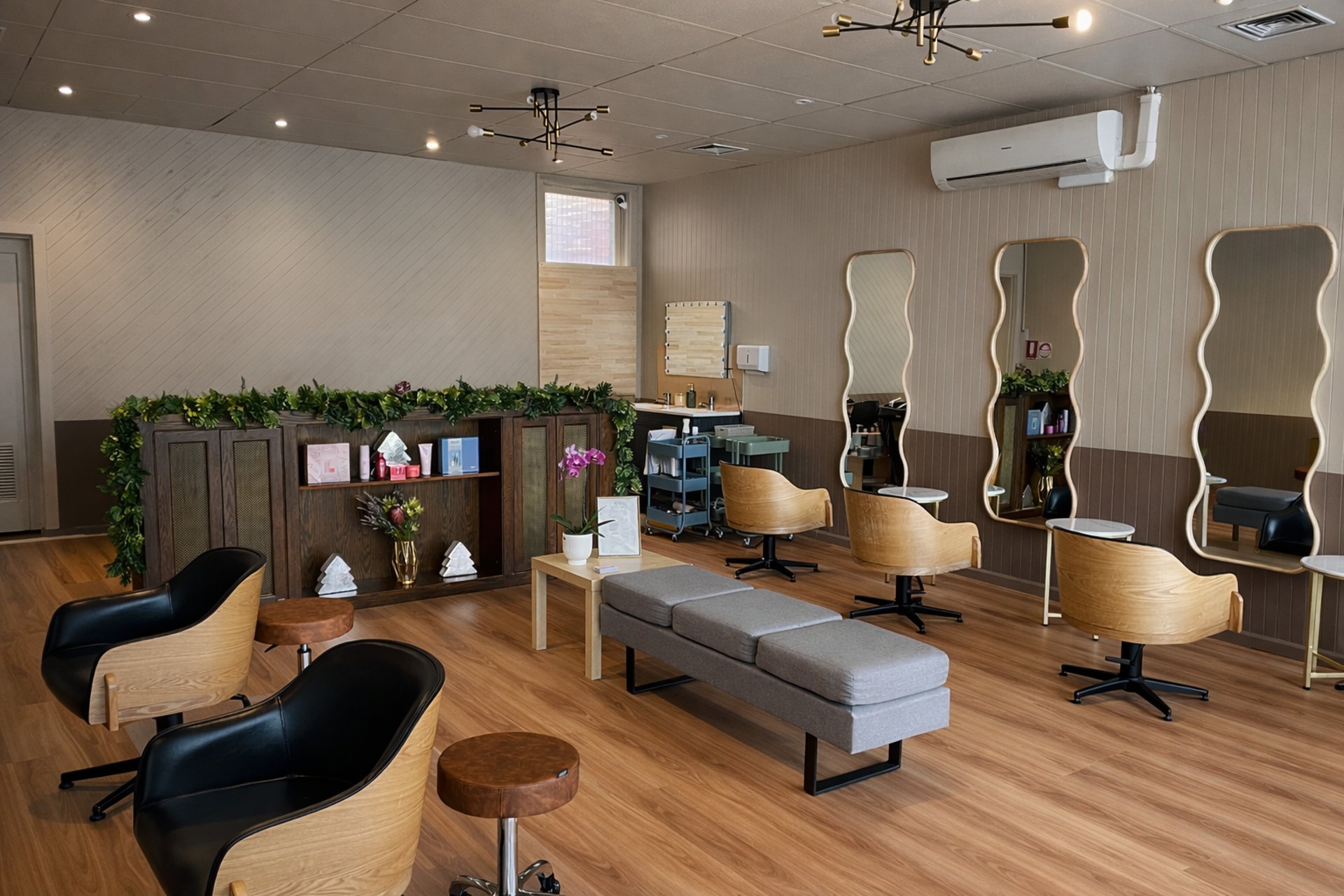
At Pascoe-Watson Hair Studio in Surrey Hills, we believe every hair type deserves a strategy built specifically for it, not a one-size-fits-all approach adapted awkwardly to work.
For fine-haired clients, that means:
Precision cutting that creates movement and removes weight in exactly the right places
Colour techniques that add depth and dimension without overloading the hair
Lightweight styling consultations, so you leave knowing not just how your hair looks, but how to actually recreate it at home
Honest conversations about what will and won't work, and why
Fine hair, done well, looks light and effortless and quietly confident. Like it wasn't trying too hard. Like it just is.
That's the goal. And it's more achievable than you might think.
Come in and let's talk about your hair, what it is, what it needs, and what's actually possible. We'd love to show you what fine hair can do.
Pascoe-Watson Hair Studio | Surrey Hills, Melbourne | Hair. Care. Soul.
609 Whitehorse Road, Surrey Hills. Melbourne, VIC 3127.
Ph: 0490-419-214
Tue-Wed: 10am-2.30pm & 4pm-6pm
Thu-Fri: 10am-2.30pm & 4pm-8pm
Sat: 10am-4pm
ACN: 689286879 © 2026, VIC. All rights reserved.